
SPECIAL SESSION #20
Electrochemical Sensing for Intelligent Industrial IoT: Innovations from Materials to Edge AI
ORGANIZED BY
 Valentina Bianchi
Valentina Bianchi
University of Parma, Italy
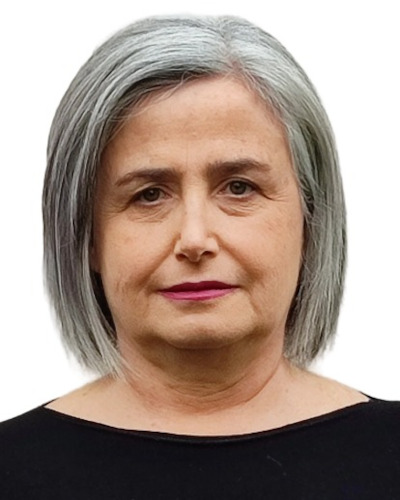 Ilaria De Munari
Ilaria De Munari
University of Parma, Italy
SPECIAL SESSION DESCRIPTION
Electrochemical sensing technologies are rapidly evolving into key enablers for next-generation Industrial Internet of Things (IIoT) systems. Their ability to detect analytes with high sensitivity, selectivity, and low power consumption makes them ideal for distributed monitoring in industrial environments, smart manufacturing, environmental supervision, energy systems, and predictive maintenance. However, realizing their full potential requires a synergistic integration of advanced readout electronics, robust digital signal processing, and emerging AI-based inference methods capable of operating on-device or within cloud-edge architectures.
This Special Session aims to bring together researchers, practitioners, and industry experts to discuss recent advances and challenges in the design, modeling, and deployment of electrochemical sensor systems tailored for industrial IoT applications. The session will cover the entire signal chain—from the physical sensing interface to intelligent data interpretation—highlighting innovations that improve measurement accuracy, resilience, and operational efficiency in real industrial contexts.
TOPICS
Contributions are invited in, but not limited to, the following areas:
- Novel electrochemical sensing principles and materials;
- Sensor stability, calibration, drift compensation, and longevity in harsh industrial conditions;
- Low-noise, low-power analog front-end (AFE) design for electrochemical measurements;
- Sensors based on edge-compatible embedded platforms, mixed-signal ASICs, and system-on-chip solutions, with wireless IoT integration;
- Digital Signal Processing for Electrochemical Signals;
- AI-Driven Interpretation and Decision Support techniques for Electrochemical Sensors and Systems;
- On-edge AI, for Electrochemical Sensors and systems.
ABOUT THE ORGANIZERS
Valentina Bianchi (Senior Member, IEEE) received the B.Sc. and M.Sc. degrees in Electronic Engineering and the Ph.D. degree from the Department of Information Engineering, University of Parma, Parma, Italy, in 2003, 2006, and 2010, respectively. She is currently an Associate Professor with the Department of Engineering and Architecture, University of Parma.
She has participated in numerous national and international research projects and has authored or coauthored more than 70 papers in international journals and conference proceedings.
Her current research interests include the design and validation of sensors for electrochemical and agri-food applications, as well as for human activity recognition. She is also active in the development of systems for state-of-charge estimation of batteries and supercapacitors. In addition, she works on the design of digital systems implemented on field-programmable gate arrays (FPGAs) and microcontrollers, with a particular focus on on-edge artificial intelligence.
Prof. Bianchi serves as an Associate Editor of the IEEE Transactions on Instrumentation and Measurement.
Ilaria De Munari (Senior Member, IEEE) received the M.Sc. degree in electronic engineering and the Ph.D. degree in information technologies from the University of Parma, Parma, Italy, in 1991 and 1995, respectively. In 1997, she joined the Department of Information Engineering (now the Department of Engineering and Architecture), University of Parma, as an Assistant Researcher, becoming an Associate Professor of electronics, and, in 2024, a Full Professor.
She has authored or coauthored more than 100 articles in international journals and conference proceedings. Her past research activities include the reliability of electronic devices and the design of electronic systems for active assisted living, in the context of which she participated in several European projects.
Her current research interests include digital system design, with a particular focus on electronic systems for electrochemical applications, human activity recognition, and battery state-of-charge estimation using machine learning techniques.