SPECIAL SESSION #23
Electrical impedance techniques for the characterization of biological tissues
ORGANIZED BY
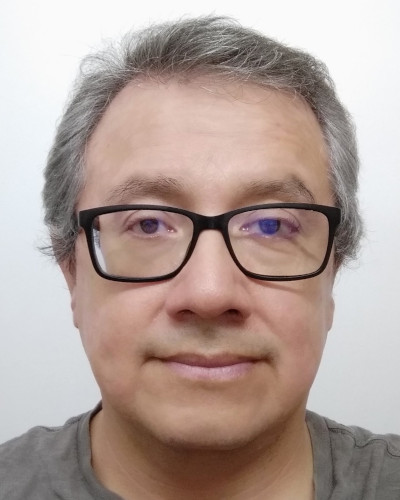 Ernesto Serrano-Finetti
Ernesto Serrano-Finetti
Instrumentation, sensors and interfaces group, Universitat Politècnica de Catalunya, Barcelona, Spain
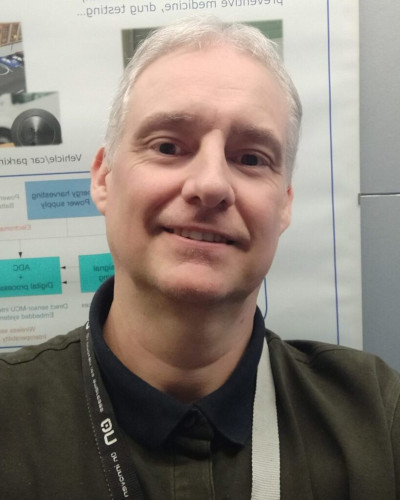 Oscar Casas
Oscar Casas
Instrumentation, sensors and interfaces group, Universitat Politècnica de Catalunya, Barcelona, Spain
SPECIAL SESSION DESCRIPTION
Interest in the use of electrical impedance techniques for the characterization of biological tissues is increasing steadily year after year mainly due to its non-destructive and non-invasive nature, and also to the reduced costs in developing measurement systems. In particular, the techniques of electrical impedance spectroscopy (EIS) and single-frequency electrical impedance (SF) have a long record of applications in the field of human medicine, from body composition analysis to impedance cardiography. Most recently, it is being used in studies of plants for agricultural applications (e.g., fruit quality, water stress), in studies of microorganisms (e.g., tissue cultures, microbial fuel cells) and also in animals (e.g., physiological activity). Nevertheless, there are still some issues to be resolved in terms of spatial and temporal sensitivity, electrode technology, motion artefacts, standardization, robustness, validation, and data processing (i.e., data fitting to equivalent circuits).
This Special Session aims to bring together contributions that addresses these issues in applications related to living organisms and biological systems.
TOPICS
Paper submissions are welcome on (but not limited to) the following topics:
- Low-cost EIS/SF measurement system design;
- Advances in electrode technology;
- Applications of EIS/SF to expand the current understanding of biological systems;
- Applications to living organisms, from the cellular level to higher order animals and plants;
- Motion artefacts reduction techniques;
- Novel data analysis techniques;
- Standardization of measurement protocols.
ABOUT THE ORGANIZERS
Ernesto Serrano-Finetti received the Ingeniero en Electrónica degree from the Pontificia Universidad Católica del Perú, Peru, in 1998 and the Ph.D. degree in Biomedical Engineering from the Universitat Politècnica de Catalunya – Barcelona Tech (UPC), Barcelona, Spain, in 2003. He is an Associate Professor at the UPC since 2002 where he teaches courses in electronic systems and instrumentation related topics. In 2008, he was recipient of the José Castillejo nobility grant and joined the Biomedical Sensors Systems group at Philips Research Europe in Endhoven (Netherlands) until 2009. His research interests includes low-power analog design for autonomous sensors, sensor interfaces for applications ranging from smart farming to physiological measurements in humans, animals and plants, and measurements methods based on electrical impedance for non-invasive measurements of biological tissues.
Oscar Casas received the B.S degree in telecommunications engineering and the PhD in telecommunications engineering from the Universitat Politècnica de Catalunya (UPC), Barcelona, Spain, in 1994 and 1998, respectively. He is currently an Associate Professor of Electronic Engineering with UPC and teaches courses in several areas of electronic instrumentation. His current research interests include sensor interfaces, autonomous sensors, electric impedance measurements, electronic instrumentation and noninvasive physiological measurements.