SPECIAL SESSION #11
Education 5.0: Next-Generation Training through Pedagogical Innovation and AI/XR Technologies
ORGANIZED BY
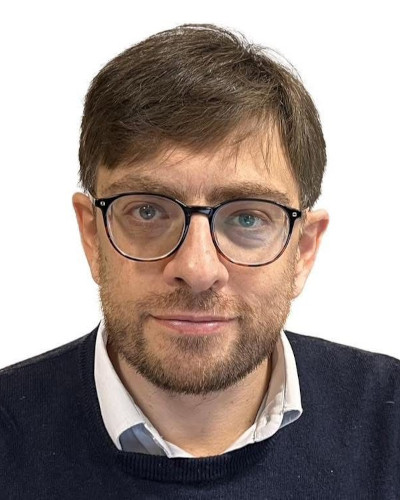 Francesco Bonavolontà
Francesco Bonavolontà
University of Naples Federico II, DIETI, Italy
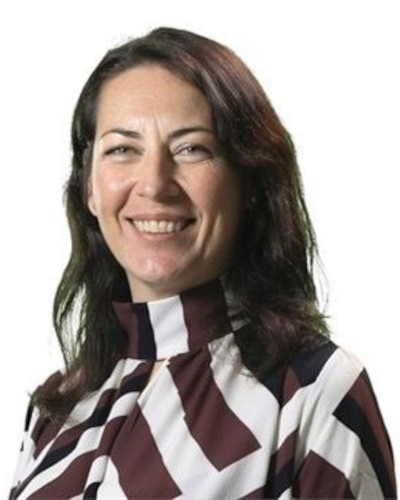 Annalisa Liccardo
Annalisa Liccardo
University of Naples Federico II, DIETI, Italy
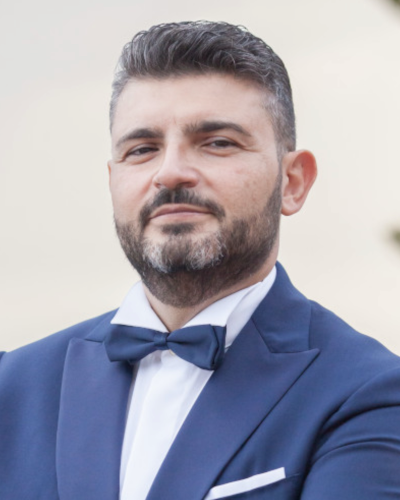 Francesco Lamonaca
Francesco Lamonaca
University of Calabria, DIMES, Italy
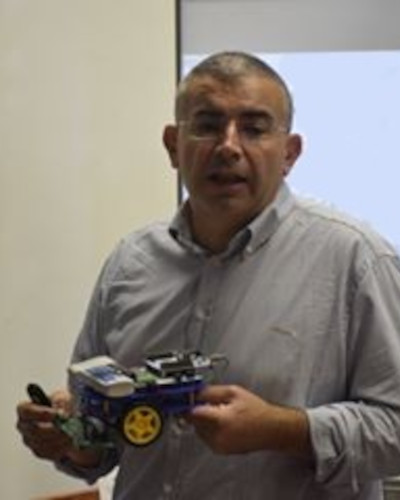 Mauro D’Angelo
Mauro D’Angelo
Perlatecnica ETS, Naples, Italy
 Francesco Picariello
Francesco Picariello
Universitas Mercatorum, Department of Engineering and Sciences, Italy
 Alessia Teresa Silvestri
Alessia Teresa Silvestri
Universitas Mercatorum, Department of Engineering and Sciences, Italy
 Luca De Vito
Luca De Vito
University of Sannio, Department of Engineering, Italy
SPECIAL SESSION DESCRIPTION
This Special Session explores how Education 5.0 is reshaping training models through pedagogical innovation and emerging digital technologies. The focus is on intelligent learning environments integrating AI tools, immersive XR, advanced simulations and cyber-physical platforms to support experiential and skills-oriented education. Contributions will highlight training ecosystems inspired by modern production systems, based on digital competencies, laboratory-based project work and connected practices. Case studies from universities, higher technical institutes (ITS), telematic universities currently experiencing strong expansion, and industry–academia collaborations are particularly welcome. The session addresses both methodological and technological perspectives, including immersive learning spaces, remote and virtual laboratories, digital twins for education, and data-driven evaluation. Attention is also devoted to human- centered, accessible and sustainable design. This Special Session aims to foster the development of next-generation educational frameworks capable of bridging theory and practice and supporting lifelong learning in evolving digital and industrial contexts.
TOPICS
Paper submissions are welcome on (but not limited to) the following topics:
- Education 5.0 frameworks and next-generation training models;
- Pedagogical innovation for digital, immersive and AI-supported learning environments;
- Artificial Intelligence in Teaching and Learning (adaptive learning, ITS, personalization);
- AI-based learning analytics, assessment, evaluation and proctoring;
- Extended Reality (VR, AR, XR) for education and professional training;
- Immersive industrial training, digital twins and virtual commissioning;
- Cyber-physical platforms for education, training and smart laboratories;
- Remote, virtual, hybrid laboratories and digital campus models;
- E-learning strategies, AI-supported distance learning and digital learning ecosystems;
- Student engagement, retention and analytics in online and telematic universities;
- Quality assurance and accreditation in online and telematic higher education;
- Medical, biomedical and healthcare education: methods and technologies;
- Industry–academia collaborative training, work-based and experiential learning;
- Emerging instructional theories, comparative and international education;
- Ethical, human-centered, accessible and sustainable AI/XR for education;
- Virtual operator training for robotics, automation, machining, and process control;
- XR-based upskilling for smart factories and collaborative robotics;
- Digital twins for industrial training and multi-scenario simulations;
- Simulation-driven learning for additive manufacturing, welding, CNC, and assembly;
- Virtual commissioning and model-based engineering tools for education;
- Performance indicators, learning analytics, and metrology for industrial training systems;
- Universal Design for Learning (UDL);
- Individualized Education Plans (IEPs);
- Special Education and Inclusive Teaching;
- Well-begin and Active Participation in Inclusive Education.
ABOUT THE ORGANIZERS
Francesco Bonavolontà is an Associate Professor of Electrical and Electronic Measurements at the University of Naples Federico II. After completing his PhD in Electrical Engineering, he developed an extensive research activity on advanced measurement systems, IoT sensor networks, and solutions for Industry 4.0, Precision Livestock Farming, and agri-food sustainability. He is the author of more than 100 international publications and serves as Associate Editor for journals such as Scientific Reports (Nature) and Measurement: Sensors (Elsevier). He has coordinated major projects within PNRR, PRIN, and industrial frameworks, collaborating with national and international research institutions and industrial partners. He is also co-inventor of the patent System and Method for Capturing Wild Boars (2023).
Annalisa Liccardo (Member, IEEE) received the M.S. (cum laude) and Ph.D. degrees in electrical engineering from the University of Naples Federico II, Naples, Italy, in 2003 and 2006, respectively.,She was a Tenure-Track Researcher with the Department of Electrical Engineering and Information Technology, University of Naples Federico II, from 2013 to 2016, where she has been an Associate Professor since 2016. She is currently the Head of the Laboratory “Measurement for Smart Grid,” Centre for Advance Metrological Services (CESMA), University of Naples Federico II. She is the Founder of the spin-off ARCADIA, Naples, for the realization of AR environments for remote control of measurement instruments. Her main current research interests involve advanced measurements for monitoring and protecting electrical power systems, IoT sensors for electrical measurements, distributed measurement systems, and AR-based remote laboratories.
Francesco Lamonaca (Senior Member, IEEE) received the M.S. degree in computer science engineering and the Ph.D. degree in computer and system science from the University of Calabria, Cosenza, Italy, in 2005 and 2010, respectively, and the doctorate degree equivalences in science and engineering science from the Université Libre de Brussels, Brussels, Belgium, in 2010 and 2011, respectively. He is currently an Associate Professor of Electronic Measurements with the University of Calabria. His current research interests include measurements, signal processing for structural health monitoring, non-invasive monitoring and testing, IoT-based monitoring systems, synchronization of networking measurement instruments and sensor measurements for medical use, and measurements and systems for the elaboration of measurement information based on artificial intelligence. Prof. Lamonaca is a member of the TC-10—Waveform Generation, Measurement and Analysis, the TC-25 Medical Measurement, and the TC-37—Measurements and Networking of the IEEE Society on Instrumentation and Measurement (IM), IEEE, IM, GMEE, IAHR, and International Measurement Confederation (IMEKO). He was the Special Session Chair of MeMeA 2016 and organized several special sessions in the field of metrology for living environment and health. He is the Vice-Officer of Commission A—Electromagnetic Metrology of the Union Radio Scientifique Internationale (International Union of Radio Sciences)—Italian National Committee. He won competitions as first classified: the University of Calabria, Young Researchers 2010 and 2012; GMEE, Mobility Research Grants 2011; TE-RE-RD, several Best Paper Awards, the IEEE Vehicular Technology/Communication Society Joint Chapter Italy Section Concerning with Innovative Ideas Against Corona Virus, 2020, and several outstanding reviewer awards. He is the Editor in Chief of Acta IMEKO and Associate Editor of Sensors MDPI. He is the General Chair of the IEEE Workshop on Metrology for Living Environment 2022-2025, and of the IEEE conference on Metrology for Archaeology in 2022.
Mauro D’Angelo is the Founder and President of Perlatecnica ETS, a non-profit organization established in 2014 and dedicated to promoting digital literacy, robotics education, and STEM competences.
For over a decade, he has designed and coordinated international technological and educational projects, collaborating with schools, universities, and European institutions.
His work focuses on developing innovative learning environments based on smart cities, robotics, artificial intelligence, and cybersecurity, combining technology with creativity, ethics, and experiential learning.
He has strong expertise in managing funded and complex projects and in leading multidisciplinary teams, with a consistent focus on the social impact of technology and on empowering younger generations.
Alongside his non-profit activities, he works at STMicroelectronics in the field of software quality for the automotive sector.
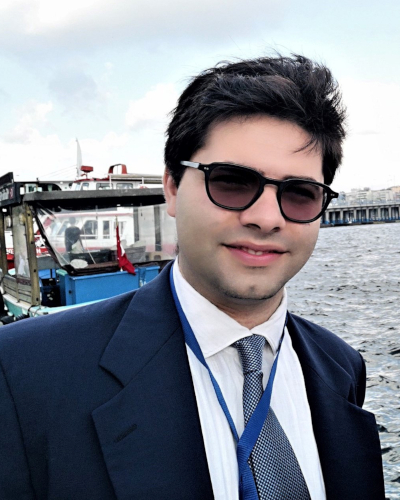
Francesco Picariello is an Associate Professor of Electrical and Electronic Measurements at the Department of Engineering and Sciences of Universitas Mercatorum. Previously, he was an Assistant Professor at the University of Sannio, where he conducted research on data acquisition systems based on compressed sensing and distributed measurement systems utilizing the Internet of Things (IoT) paradigm in various application fields, spanning from biomedical to industrial sectors. His research interests include sensor signal processing, image processing, marker tracking, biomedical measurement systems, sensor networks and interconnection, measurement instruments, and distributed measurement systems. He earned a Ph.D. in Information Engineering from the University of Sannio in 2016, after graduating with honors in Electronic Engineering from the University of Salerno. He obtained the National Scientific Qualification as full Professor in 2025. He has authored over 120 scientific publications and is actively involved in numerous national and international research projects. He serves as Editor and Guest Editor for several international journals in the field of measurements and sensors.
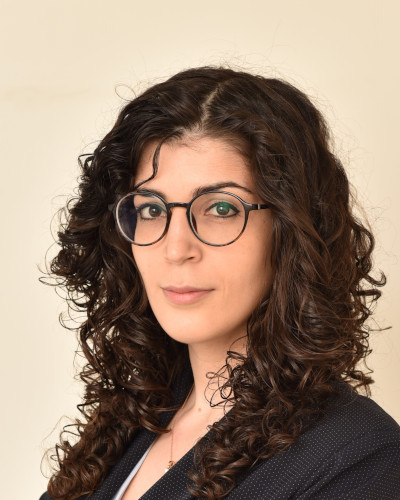
Alessia Teresa Silvestri is an Associate Professor at Universitas Mercatorum. She obtained her Master's degree in Mechanical Engineering for Design and Production, cum laude, in 2018. She earned a Ph.D. in Technology, Innovation, and Management from the University of Naples and the University of Bergamo in 2022. Her doctoral research focused on optimizing process parameters in metal additive manufacturing technologies for tailored structures, particularly the deposition of functionally graded materials. She is the author of numerous papers on additive manufacturing and has received several national and international awards for her research activities. Prof. Silvestri's main research interests include the study of metal additive manufacturing technologies, as well as process monitoring, solid-state joining processes, and polymer-based additive manufacturing.
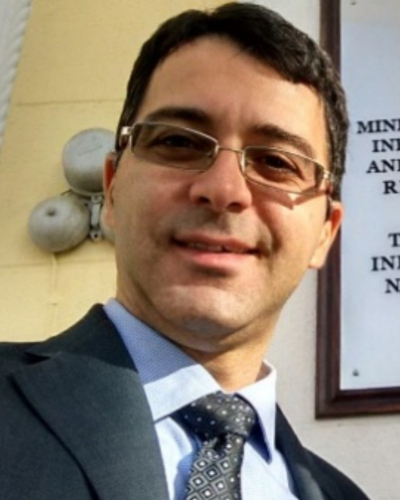
Luca De Vito is Associate Professor at the Department of Engineering, University of Sannio in electric and electronic measurement. He received the National Academic Qualification as Full Professor in 2018. He is Editor-in-Chief of the ELSEVIER Measurement:Sensors journal. He is member of the IEEE since 2010, he is member of the IEEE Instrumentation and Measurement Society (IMS), of the IEEE Aerospace and Electronic System Society, and of the IEEE Standards Association. He is Senior Member of the IEEE since 2012. He is Member-At-Large of the IMS Administrative Committee (AdCom) for the term 2026-2029 and Region 8 Liaison. He is Member of the Technical Committee 10 (TC-10) of the IMS and Chairman of the Working Group on Digital to Analog Converter Testing. He is member of the AFCEA. He published more than 240 papers on international journals and conference proceedings, mainly dealing with measurements for the telecommunications, data converter testing and biomedical instrumentation.